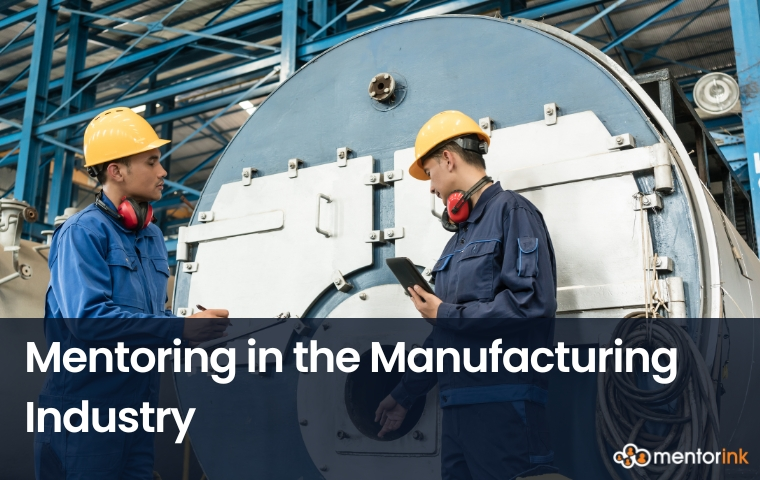
Manufacturing does not run on process alone. It runs on the people who know when the process needs attention.
A manual can tell someone what to do. A training session can explain the safety rules. A dashboard can show the numbers. But it is often an experienced worker who notices the machine sounds different, the material is behaving unusually, the same quality issue is about to repeat, or the handover missed one detail that could slow the next shift down.
This is the knowledge manufacturers cannot afford to leave undocumented, unshared, or locked inside one person’s experience.
Mentoring in manufacturing helps turn that experience into structured learning. It connects employees with people who understand the work beyond the written process: the floor, the equipment, the pace, the risks, and the judgment that keeps production moving safely and consistently.
Importance of Mentoring in Manufacturing
In manufacturing, small gaps in knowledge can create large consequences. A missed warning sign, an unclear handover, a misunderstood process step, or a lack of confidence to ask questions can affect safety, quality, productivity, and team performance.
That is why mentoring in manufacturing is not just an HR initiative. In a manufacturing environment, the impact of mentoring can show up in very practical ways: fewer repeated mistakes, smoother handovers, faster ramp-up for new employees, stronger safety habits, and less critical know-how staying locked inside one person’s head.
Mentoring does not make machines run by itself. But it helps the people around those machines share what they know, notice problems earlier, and build the judgment that keeps production safer, steadier, and more consistent.
Why Manufacturing Needs Mentoring Now
Manufacturing has always depended on experience. But today, that experience is harder to protect and harder to replace.
Many manufacturers are trying to bring new employees up to speed faster, keep skilled workers longer, prepare teams for automation and digital tools, and protect critical know-how before experienced employees retire or move on. At the same time, production still needs to run, quality still needs to hold, and safety cannot be treated as something people will simply “pick up over time.”
Mentoring can help manufacturers respond to pressures such as:
- Skilled labor shortages: New employees often need more than onboarding to become confident, reliable contributors. Mentoring helps them understand how the work actually happens on the floor.
- Retiring expertise: Experienced workers often carry years of machine-specific, process-specific, and plant-specific knowledge. Mentoring gives that knowledge a clearer path to move before it leaves the organization.
- Tribal knowledge: Not everything that matters is written in SOPs. Mentoring helps employees learn the watch-outs, patterns, workarounds, and judgment calls that usually come from years of experience.
- Technology change: Automation, robotics, AI, data tools, and connected systems are changing manufacturing roles. Mentoring can help employees adapt to new tools without losing the practical judgment that still matters.
- Quality and safety expectations: In manufacturing, small mistakes can affect people, products, timelines, and costs. Mentoring helps employees understand not only what the rules are, but why they matter in real situations.
- Retention and career growth: Employees are more likely to stay when they can see a future. Mentoring helps people understand possible paths from operator to technician, team lead, supervisor, quality specialist, engineer, or plant leader.
- Frontline leadership development: Great operators do not automatically become great supervisors. Mentoring helps future leaders build communication, decision-making, and people management skills before they are fully on their own.
The point is not to replace technical training. The point is to protect the experience around it: the judgment, habits, warnings, and practical knowledge that keep manufacturing work safe, consistent, and resilient.al training. The point is to surround it with experience, context, and guidance.
What Mentoring Actually Supports in Manufacturing
Mentoring in manufacturing is not just about general employee growth. It supports the practical habits, judgment, and confidence that affect how work happens on the floor.
- Safer decision-making: Mentoring helps employees understand why procedures exist, not just what they say. A mentor can explain when to stop, when to ask, which shortcuts create risk, and why speaking up early matters.
- Quality awareness: Experienced workers often recognize patterns behind recurring issues, such as when a setup usually creates defects, which process steps are easy to misunderstand, or what small signals suggest a larger quality problem.
- Troubleshooting confidence: Newer employees may know the official process but still hesitate when something feels off. Mentoring gives them a way to learn how experienced people diagnose problems, check assumptions, and escalate issues.
- Better shift handovers: In manufacturing, one missed detail can affect the next shift. Mentoring can help employees understand what information matters, how to communicate it clearly, and why handovers are part of operational reliability.
- Stronger career movement: Manufacturing employees may not always see the full range of paths available to them. Mentoring can help people understand how to move into maintenance, quality, engineering support, supervision, operations leadership, or other roles.
- Knowledge transfer before it is too late: When experienced employees retire or change roles, organizations risk losing more than job titles. Mentoring helps capture the practical know-how that keeps machines, teams, and processes running smoothly.
This is what makes mentoring especially useful in manufacturing. It does not replace technical training or safety procedures. It helps employees understand how to apply them with better judgment, more confidence, and a clearer sense of responsibility.

How to Build a Successful Manufacturing Mentoring Program
A manufacturing mentoring program should not be designed like a generic office-based development initiative. It needs to fit the floor, the shifts, the safety expectations, and the way work actually happens.
Start with the problem you need mentoring to solve
Before matching people, define the workforce need behind the program. Is the goal to help new hires ramp up faster? Support apprentices? Transfer knowledge before experienced workers retire? Strengthen safety culture? Prepare future team leads and supervisors?
Manufacturing mentoring works best when it is tied to a real operational or workforce challenge. Otherwise, it can easily become a vague development initiative that sounds good but does not change much on the floor.
Design the program around manufacturing reality
The structure should reflect how manufacturing teams actually work. Long formal meetings may not fit shift patterns or production rhythms. Short check-ins, structured floor conversations, cohort sessions, or scheduled mentoring moments around shift changes may be more realistic.
Matching should also go beyond basic profile information. In manufacturing, a strong match may depend on plant, shift, line, machine type, technical area, role, experience level, and development goal. Shared operational context often matters more than a neat match on paper.
Make knowledge transfer intentional
One of the biggest opportunities in manufacturing mentoring is making invisible knowledge visible. Mentors should be encouraged to share not only what they do, but what they notice, what they avoid, what they check twice, and what they wish they had learned earlier.
This is especially important when experienced workers hold machine-specific, process-specific, or plant-specific knowledge that is difficult to capture in training documents.
Set clear safety and confidentiality boundaries
Mentoring should create trust, but it should never keep serious safety risks private. Participants need to know what can stay confidential and what must be escalated through the right channels.
This distinction matters in manufacturing because mentoring conversations may involve real equipment, real risks, and real production issues. A good program protects trust without compromising safety or compliance.
Support mentors and program managers
Experienced workers may be excellent at the job but new to mentoring. Give them simple guidance on how to explain, listen, ask questions, and support learning without taking over.
At the same time, HR and L&D teams need enough visibility to understand participation, feedback, and progress. The goal is not to monitor private conversations, but to know whether the program is active, useful, and reaching the right people.
The best manufacturing mentoring programs feel practical. They help people learn better, work safer, and grow with more confidence without adding unnecessary complexity to the floor.learn better, work safer, and grow with more confidence without adding unnecessary complexity to the floor.

Mentoring Models for Manufacturing Teams
Manufacturing mentoring does not need to look like one standard program for everyone. The right model depends on where knowledge is most at risk, where people need support, and which roles are critical to keep the operation running safely and consistently.
Common mentoring models for manufacturing teams include:
- Ramp-up mentoring for new hires: Helps new employees understand safety expectations, work routines, equipment basics, quality standards, and team communication before mistakes become habits.
- Apprenticeship mentoring: Connects classroom or formal technical learning with hands-on guidance from experienced operators, technicians, or specialists.
- Equipment and process mentoring: Supports employees who need machine-specific, line-specific, or process-specific knowledge that is difficult to learn from documentation alone.
- Maintenance and troubleshooting mentoring: Helps technicians and operators learn how experienced people recognize warning signs, diagnose recurring issues, and know when to escalate.
- Knowledge transfer mentoring: Gives experienced employees a structured way to pass on plant-specific, equipment-specific, or role-specific expertise before retirement, promotion, or internal movement.
- Frontline leadership mentoring: Prepares team leads, supervisors, and future plant leaders for communication, decision-making, conflict management, shift coordination, and people leadership.
- Cross-functional mentoring: Connects operations, maintenance, quality, engineering, supply chain, and HR teams so employees understand how decisions in one area affect the wider manufacturing system.
The best model depends on the risk or opportunity the organization is trying to address. If critical expertise is leaving, knowledge transfer mentoring should come first. If new employees are struggling to ramp up, new hire or apprenticeship mentoring may be more urgent. If the next challenge is succession, frontline leadership mentoring becomes essential.

Where Coaching Fits in Manufacturing Mentoring
Coaching and mentoring in manufacturing often support each other, but they solve different problems.
Coaching is usually used when someone needs to improve a specific skill, behavior, or performance area. For example, a supervisor may coach an employee on following a process step correctly, leading a shift meeting, improving a handover, or responding to a quality issue.
Mentoring is broader. It helps employees learn how experienced people think through real manufacturing situations: what they notice, what they question, what they double-check, and how they prepare for more responsibility over time.
In manufacturing, coaching helps correct or strengthen a specific part of the work. Mentoring helps transfer the judgment behind the work.lity. Manufacturing teams need both: coaching for focused improvement, mentoring for experience-based growth.
How Mentorink Can Support Manufacturing Mentoring Programs
Manufacturing mentoring can become hard to manage when it spans multiple plants, shifts, departments, technical areas, and employee groups. What starts as a good idea can quickly become a spreadsheet problem.
Mentorink helps manufacturing organizations structure mentoring without making it feel heavy or corporate. It can support:
- Matching employees by role, plant, shift, experience level, technical area, development goal, or mentoring track
- Running different mentoring programs such as onboarding, apprenticeship, technical, leadership, or knowledge transfer mentoring
- Keeping participants engaged with guided journeys, reminders, and check-ins
- Giving HR and L&D visibility into participation, feedback, and progress across teams or locations
- Reducing manual follow-up work for program managers
For manufacturers, the goal is simple: make practical knowledge easier to share, easier to manage, and easier to scale across the people who keep operations moving.
FAQs About Mentoring in Manufacturing
How can mentoring help with knowledge transfer in manufacturing?
Mentoring helps experienced employees share practical knowledge that may not be fully documented, such as machine behavior, troubleshooting patterns, quality risks, maintenance signals, and plant-specific ways of working. This is especially valuable when experienced workers retire, change roles, or move to different parts of the organization.
Is mentoring in manufacturing only for new hires?
No. New hires can benefit from mentoring, but manufacturing mentoring can also support apprentices, operators, technicians, engineers, supervisors, team leads, quality teams, maintenance teams, and future plant leaders. The model should match the development need.
How can mentoring support safety in manufacturing?
Mentoring can help employees understand not only safety rules, but the judgment behind them. Mentors can explain what to watch for, when to stop and ask, which shortcuts create risk, and why speaking up matters. Serious safety concerns should always be escalated through the proper channels.
How do manufacturers measure mentoring success?
Manufacturers can look at participation, meeting activity, feedback, onboarding experience, retention, internal mobility, promotion readiness, knowledge transfer, safety awareness, and skill development. The goal is not to monitor private conversations, but to understand whether the program is active and useful.
Conclusion
Manufacturing depends on people who can work safely, notice details, solve problems, and learn from experience. Training can explain the process, but mentoring helps employees understand how the work actually happens when machines, people, time, and pressure all meet on the floor.
That is why mentoring in manufacturing should not be left to chance. When structured well, it helps manufacturers transfer critical knowledge, support new employees, prepare future leaders, and build stronger teams across plants, shifts, and roles.