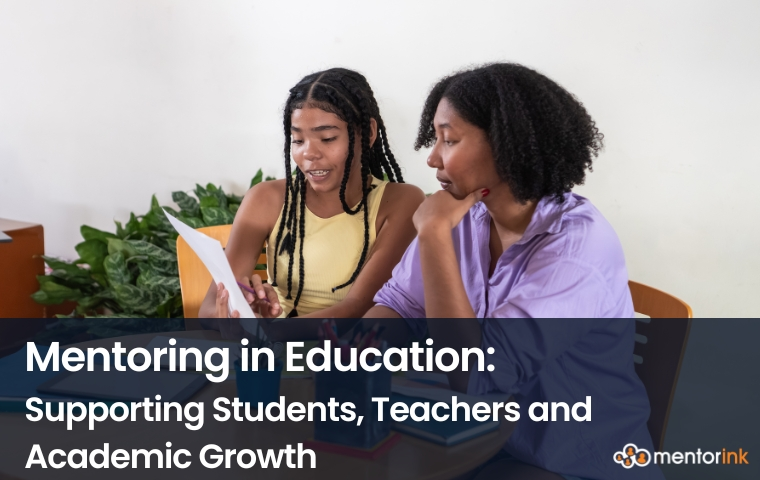
Learning environments are not only shaped by lessons, lectures, and curricula. They are also shaped by the conversations that help people feel less alone in the process.
For a student, that conversation might be about choosing the right path, building academic confidence, or feeling like they belong. For a new teacher, it might be about handling a difficult classroom moment. For an early-career faculty member, it might be about understanding expectations that are rarely written down clearly.
Mentoring in education gives these conversations a structure. It helps schools, universities, and education organizations support people through the moments where formal instruction is not enough: transition, uncertainty, confidence-building, belonging, career direction, and professional growth.
Importance of Mentoring in Education
Education is not a single learning journey. It includes many transitions: from one grade level to another, from school to university, from student life to professional life, from teacher training to classroom practice, and from early academic roles to long-term faculty development.
At each stage, people are expected to understand not only what they are learning or teaching, but also how the education system around them works. These expectations are not always explained clearly in formal instruction.
Importance of Mentoring in Schools and Pre-University Education
In schools and pre-university education, mentoring is important because students are still developing their sense of identity, confidence, responsibility, and direction. Academic support alone may not be enough when students are also learning how to manage expectations, ask for help, build study habits, and understand where they fit within the school community.
For teachers, this stage also brings a very practical challenge. Formal teacher training may prepare them for pedagogy, but the daily reality of teaching often includes classroom dynamics, parent communication, student motivation, emotional labor, and unexpected situations that are difficult to learn from theory alone.
Mentoring gives these experiences a place to be discussed, understood, and navigated with guidance.
Importance of Mentoring in Higher Education
In higher education, mentoring becomes important because students, faculty members, and academic staff often face more complex choices with less direct supervision.
University students may need to make decisions about courses, research interests, internships, postgraduate study, career direction, and professional identity. Early-career academics may need to understand how teaching, publishing, supervision, collaboration, and institutional expectations fit together.
Higher education also includes many invisible rules. Students and faculty members are often expected to “figure things out” independently, even when the system is unfamiliar. Mentoring helps make that hidden knowledge more accessible.
Why Mentoring in Education Matters
In education, many development needs sit in the space between formal instruction and real experience.
A student may be told what courses to take, but not how to build confidence in a new academic environment. A teacher may be trained in pedagogy, but not always prepared for the emotional and practical realities of the classroom. A faculty member may understand their discipline, but still need guidance on supervision, research culture, or institutional expectations.
This is where mentoring becomes important. It gives schools, universities, and education organizations a way to make this “in-between” support more visible, intentional, and consistent.
It helps people navigate the parts of education that are not always written in a syllabus, handbook, or training module.
How to Build a Successful Education Mentoring Program
A successful education mentoring program should not start with the question, “Who can mentor whom?”
It should start with a more education-specific question: where are people getting lost in the learning journey?
In schools, universities, and education organizations, mentoring is most valuable when it supports the moments where formal systems are present but not always enough. These may include a student’s first year, a teacher’s first classroom experience, a faculty member’s transition into research and supervision, or an educator’s move into leadership.
To build a program that fits the education context, focus on these design choices:
- Map the transition point the program will support. Education mentoring often works best around moments of transition: entering the first year, moving from school to university, starting teaching practice, becoming a lecturer, taking on supervision responsibilities, or stepping into leadership.
- Separate academic support from developmental support. A student who struggles in a course may need tutoring. A student who struggles with confidence, belonging, study identity, or future direction may need mentoring.
- Design around the academic calendar. Mentoring rhythms should reflect exam periods, semester breaks, teaching loads, application deadlines, internship seasons, and grading periods.
- Protect mentoring from evaluation pressure. Mentors may also be teachers, supervisors, advisors, department heads, or senior faculty members. The program should make it clear when the conversation is developmental, not evaluative.
- Match based on educational context. Useful matching may consider academic level, subject area, department, teaching stage, research area, career interest, classroom experience, or transition need.
- Connect mentoring with existing education services. Mentoring should not replace academic advising, counseling, tutoring, supervision, or student success services. It should sit alongside them clearly.
When these choices are clear, mentoring in education becomes easier to position and easier to sustain. It is no longer just a helpful relationship between two people. It becomes a structured layer of support that fits into the wider learning environment without replacing the roles of teachers, advisors, supervisors, or student support teams.
Benefits of Mentoring in Education
The benefits of mentoring in education depend on the learning environment. In schools and pre-university education, mentoring often supports early confidence, belonging, student motivation, and teacher development. In higher education, it becomes more closely connected to academic direction, retention, career readiness, faculty development, and institutional belonging.
Benefits of Mentoring in Schools and Pre-University Education
In schools and pre-university settings, mentoring can support students and educators through important developmental moments, from adjusting to a new learning stage to building confidence in the classroom.
For mentees:
- Build academic confidence and stronger study habits.
- Feel a stronger sense of belonging within the school community.
- Receive guidance during transitions between grades, schools, or learning stages.
- Develop motivation, responsibility, and clearer personal direction.
- For new teachers, gain support around classroom confidence, lesson planning, student communication, and workload management.
For mentors:
- Strengthen leadership, communication, and listening skills.
- Reflect on their own learning, teaching, or student support practices.
- Share practical knowledge that is not always covered in formal instruction or teacher training.
- Support younger students, newer teachers, or less experienced colleagues.
- Contribute to a more supportive and connected school culture.
For schools and education organizations:
- Make student and teacher support more consistent.
- Support teacher onboarding and early-career teacher confidence.
- Strengthen inclusion, peer learning, and student belonging.
- Improve engagement across the school community.
- Create a clearer support structure beyond formal lessons, advising, or classroom instruction.
Children must be taught how to think, not what to think.
Margaret Mead
Benefits of Mentoring in Higher Education
In higher education, mentoring often supports more complex academic and professional journeys. Students, faculty members, lecturers, alumni, and education professionals may all need guidance at different points in their development.
For mentees:
- Navigate academic choices, course decisions, and future study options with more confidence.
- Connect academic learning with internships, employability, and career goals.
- Build a stronger sense of belonging within the institution or department.
- Receive guidance around postgraduate opportunities, research interests, or professional identity.
- For early-career academics or lecturers, gain support around teaching practice, supervision, research expectations, and academic career planning.
For mentors:
- Reflect on their own academic, professional, or leadership journey.
- Strengthen advising, supervision, communication, and leadership skills.
- Share experience-based knowledge with students, early-career academics, or emerging education leaders.
- Build stronger relationships across departments, cohorts, or professional networks.
- Contribute to the development of the next generation of students, academics, and education professionals.
For universities and higher education organizations:
- Support student retention, engagement, and academic belonging.
- Strengthen career readiness and employability initiatives.
- Support faculty development and early-career academic progression.
- Make guidance more accessible instead of relying only on informal networks.
- Improve collaboration between academic departments, student success teams, career services, and faculty development units.

When designed well, mentoring in education does more than create helpful individual relationships. It helps schools, universities, and education organizations build a more connected learning environment where guidance is easier to access, manage, and sustain.
Mentoring Models for Education Organizations
There is no single best mentoring model for education organizations. A model that supports first-year student belonging may not be the right fit for teacher onboarding, faculty development, or leadership preparation.
That is why mentoring models in education should be selected according to the specific support need. The goal is not simply to launch “a mentoring program.” The goal is to choose a structure that fits the people, transition, and challenge the program is designed to support.
Student-to-Student Peer Mentoring
Student-to-student peer mentoring is especially useful during transition points, such as entering a new school, college, or university. Senior students can help newer students understand academic expectations, build study habits, navigate campus or school life, and feel a stronger sense of belonging.

This model works well because peer mentors offer relatable guidance from someone who has recently experienced a similar transition.
Teacher Mentoring
Teacher mentoring supports new or early-career teachers as they move from formal teacher training into the everyday reality of the classroom. It can help with classroom management, lesson planning, student communication, workload, parent or guardian communication, and professional confidence.
This model is most effective when the mentor can support reflection without making the new teacher feel evaluated.
Faculty Mentoring
Faculty mentoring is especially relevant in higher education, where early-career academics and lecturers often need to navigate teaching, research, supervision, publishing, and institutional expectations at the same time.
Because many parts of academic life are learned informally, faculty mentoring helps make hidden knowledge more accessible and easier to act on.
Career Mentoring for Students
Career mentoring helps students connect academic learning with life after graduation. Alumni, professionals, faculty members, senior students, or industry partners can support students with career exploration, internship preparation, employability, professional networks, and understanding sector expectations.
This is one of the most practical types of mentoring in education because it helps students see how their academic choices connect to future opportunities.
Leadership Mentoring in Education
Leadership mentoring supports educators, department heads, program coordinators, academic managers, school leaders, or student leaders preparing for greater responsibility.
In education, leadership is rarely only administrative. It often involves communication, decision-making, team coordination, conflict management, and leading change in a way that affects students, teachers, faculty members, and wider learning communities.
Coaching and Mentoring in Education
Coaching and mentoring in education can work together when participants need both structured reflection and experience-based guidance.
Coaching-style conversations often support goal-setting, skill development, and action planning. Mentoring adds context, perspective, and practical insight from someone who understands the education environment. Together, they can support students, teachers, faculty members, and education leaders through moments of uncertainty or growth.
Cross-Department Mentoring
Cross-department or cross-functional mentoring can help schools and universities reduce silos between academic departments, student success teams, career services, faculty development units, and administrative teams.
This model is especially useful when support exists in many places, but teams do not always see how their work connects across the wider student or educator journey.

In education, the right mentoring model is the one that fits the transition, challenge, and people it is designed to support.
Best Practices for Running Education Mentoring Programs
Launching an education mentoring program is only the beginning. The real challenge is keeping it active inside the rhythm of academic life, where exams, teaching loads, semester breaks, grading periods, student stress, and institutional priorities can easily interrupt participation.
To keep mentoring in education consistent after launch, schools and universities need practices that fit the learning environment.
- Plan around the academic year. Mentoring activity may naturally slow down during exams, grading weeks, application deadlines, or semester breaks. Build the program rhythm around these pressure points instead of expecting the same pace all year.
- Use education-specific conversation prompts. Students may need prompts around confidence, belonging, study habits, motivation, or career direction. Teachers may need prompts around classroom practice and workload. Faculty members may need prompts around teaching, supervision, research, or institutional expectations.
- Make scheduling simple. Students, teachers, faculty members, mentors, and alumni often work with very different calendars. Easy scheduling and rescheduling can make the difference between an active mentoring relationship and one that slowly disappears.
- Prepare mentors for sensitive topics. Mentoring conversations in education may involve stress, performance anxiety, belonging, motivation, classroom challenges, career uncertainty, or academic disappointment. Mentors should know when to guide and when to refer participants to formal support.
- Keep the structure light but visible. Mentoring should not feel like another assignment. Simple goals, clear meeting expectations, reminders, and light engagement tracking can support consistency without making the relationship feel controlled.
- Collect feedback at natural milestones. Orientation periods, mid-semester points, exam seasons, teaching placements, internship cycles, and the end of the academic year are useful moments to understand what participants need.
- Connect mentoring with the wider support ecosystem. Mentoring should sit clearly alongside academic advising, counseling, student success, career services, teacher development, faculty development, and leadership development.
- Use mentoring software when coordination becomes too complex. When education organizations manage multiple cohorts, campuses, departments, mentors, or program types, mentoring software can help with matching, reminders, activity visibility, feedback, and reporting.
Sustaining education mentoring is not about adding more structure for the sake of structure. It is about creating enough support around the program so that mentoring relationships can continue even when academic life gets busy.
How Mentorink Can Support Education Mentoring Programs
Education mentoring can quickly become complex when different groups, goals, departments, and academic calendars are involved. A university may run student, alumni, faculty, and leadership mentoring at the same time. A school network may support new teachers, student wellbeing, peer learning, and leadership development across multiple campuses.
Mentorink helps education organizations manage these efforts in a clearer, more consistent way.
With Mentorink, schools, universities, and education-focused organizations can:
- Match participants by education-specific criteria, such as academic level, subject area, department, role, career interest, teaching experience, or support need.
- Manage multiple mentoring programs in one place, from student and teacher mentoring to faculty, alumni, career, and leadership mentoring.
- Keep programs active across academic rhythms with clear steps, reminders, touchpoints, and visibility into engagement.
- Collect feedback and improve each cohort based on what students, teachers, faculty members, and mentors actually need.
- Coordinate across departments, campuses, or cohorts without relying on scattered spreadsheets or manual follow-ups.
For education teams, this means mentoring becomes easier to manage without losing the human side of the relationship. Program managers can see where engagement is moving, participants can follow a clearer journey, and the organization can build mentoring as a sustainable layer of support across the learning environment.
Examples of Education Mentoring Programs on Mentorink
Education mentoring can take many forms depending on the audience, purpose, and support need. On Mentorink, education-focused organizations use mentoring programs for examples such as:
- Mentoring for displaced or at-risk scholars: A program designed to support scholars who are at risk of displacement or recently displaced by war or natural disasters, helping them access guidance, resources, and institutional support during a highly uncertain academic period.
- Alumni-to-student mentoring: A six-month mentoring program where experienced alumni meet regularly with students to share professional experience, support personal development, and help students prepare more confidently for life after school.
- International education and career mentoring: A program for participants who want to study or work abroad, supporting them with university or job search, application preparation, required documents, interview readiness, networking, and cultural adaptation.
These examples show how mentoring in education can support very different needs, from student development and alumni engagement to academic continuity, international opportunities, and access to support during difficult transitions.
For education teams, this means mentoring becomes easier to manage without losing the human side of the relationship. Program managers can see where engagement is moving, participants can follow a clearer journey, and the organization can build mentoring as a sustainable layer of support across the learning environment.
Frequently Asked Questions About Education Mentoring Programs
How is mentoring in education different from tutoring or academic advising?
Tutoring usually focuses on helping students understand a specific subject or improve academic performance in a course. Academic advising often focuses on course selection, degree requirements, or institutional processes. Mentoring in education is broader. It supports confidence, belonging, decision-making, career direction, professional identity, and development through guidance from someone with relevant experience.
Why is mentorship important for students during transitions?
Mentorship is especially important when students move into a new learning environment, such as secondary school, university, postgraduate study, or career preparation. These transitions often come with new expectations, uncertainty, and pressure. A mentor can help students understand the environment, ask better questions, build confidence, and feel less alone while they adjust.
What types of mentoring in education work best?
The best model depends on the support need. Peer mentoring can work well for first-year transition and belonging. Teacher mentoring can support classroom confidence and early-career development. Faculty mentoring can help academics navigate teaching, research, and supervision. Career mentoring can support employability, internships, and professional direction.
How can schools and universities keep mentoring programs active after launch?
Education mentoring programs need to follow the rhythm of academic life. This means planning around orientation periods, exams, semester breaks, teaching loads, internship cycles, and graduation timelines. Simple meeting structures, timely reminders, relevant conversation prompts, and light engagement tracking can help programs stay active without making mentoring feel like another assignment.
How can education organizations measure mentoring program success?
Success can be measured through both activity and experience. Useful indicators include match completion, meeting frequency, participant feedback, student confidence, sense of belonging, retention signals, career readiness, teacher onboarding progress, faculty development outcomes, and whether participants would recommend the program to others.
Conclusion
Mentoring in education works best when it is designed around the real moments where students, teachers, faculty members, and education professionals need guidance most.
For some, that moment is the transition into a new school or university. For others, it is the first year of teaching, the start of an academic career, a career decision, or a move into leadership. In each case, mentoring helps make the invisible parts of education easier to navigate: expectations, confidence, belonging, professional identity, and practical decision-making.
The strongest education mentoring programs are not built on informal goodwill alone. They need clear purpose, relevant matching, realistic structure, trust, and enough visibility to keep the program active without over-controlling the relationship.
When mentoring is managed intentionally, it becomes more than a helpful conversation. It becomes a sustainable layer of support across the learning environment, helping schools, universities, and education organizations make guidance more structured, more accessible, and easier to scale without losing the human connection at the center of mentoring.