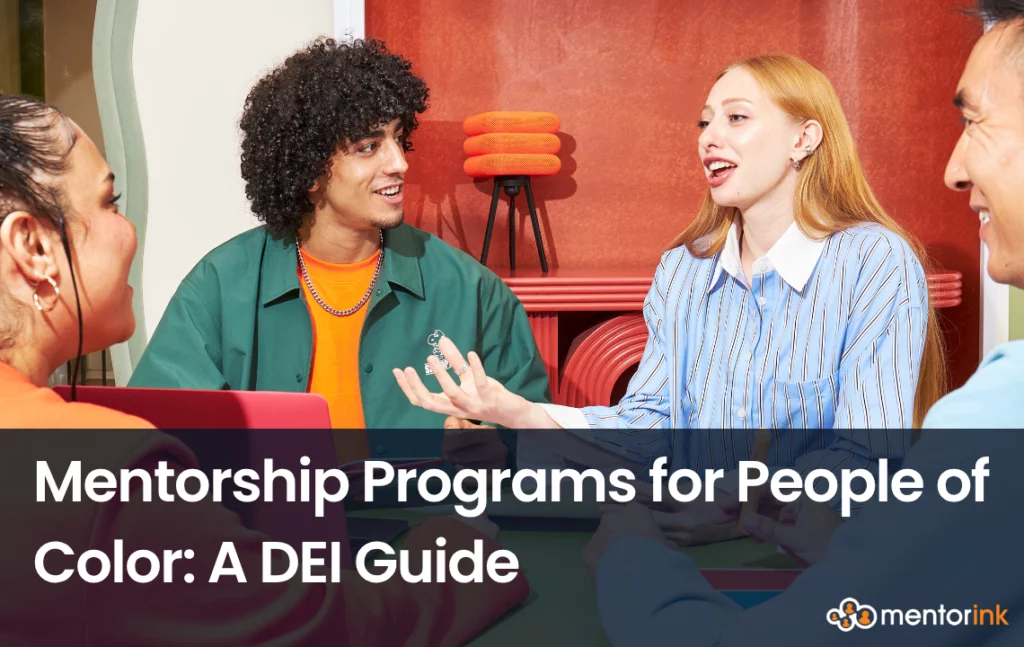
Mentorship can be a valuable part of diversity, equity, and inclusion efforts, helping organizations create more opportunities for professional development, connection, and career growth. By giving employees access to guidance, broader networks, and experienced colleagues, mentoring can support a more inclusive employee experience across different backgrounds and career stages.
Mentorship programs for people of color build on this approach by creating structured opportunities for participants to connect, learn, and grow within the workplace. Depending on the goals of the program, they may focus on career development, leadership, networking, confidence building, or access to new opportunities.
When designed thoughtfully, these programs can complement wider DEI initiatives while still keeping individual goals, interests, and development needs at the center of the mentoring relationship.
What Are Mentorship Programs for People of Color?
Mentorship programs for people of color are initiatives that create more intentional access to mentoring for employees from racially and ethnically underrepresented backgrounds. They are often developed as part of broader diversity, equity, and inclusion strategies rather than as standalone career development programs.
The goal is not to create a separate version of workplace mentoring, but to address gaps in access, visibility, and professional networks that may exist within an organization. These programs can help participants build relationships with experienced colleagues, gain exposure to different career paths, and strengthen connections across teams and levels of seniority.
They can also take different forms. Some organizations create dedicated programs for specific communities, while others integrate inclusive mentoring into broader DEI or employee development initiatives. In either case, the focus should remain on giving participants meaningful choice, relevant support, and equal access to development opportunities.
Why Mentorship Matters in DEI
1. Access to professional networks and opportunities
Career growth is influenced not only by skills and performance, but also by access to people, information, and opportunities. Research on racial equity in the workplace also highlights persistent gaps in representation and advancement across different levels of organizations. Mentoring can help broaden these networks by connecting employees with colleagues they may not otherwise have the chance to work with or learn from.
2. Representation and different perspectives
Seeing a wider range of people represented in mentoring and leadership roles can make development opportunities feel more accessible. At the same time, effective mentoring does not depend on mentors and mentees having identical backgrounds. Different perspectives can also make the relationship valuable when there is mutual understanding, respect, and openness.
3. Career development and leadership opportunities
Mentoring can support employees as they explore career paths, prepare for new responsibilities, and develop leadership skills. Within a DEI strategy, this can help organizations make development opportunities more visible and accessible across a broader range of employees.
Workplace inclusion is also shaped by employees’ day-to-day experiences. Gallup research on workplace discrimination found that 24% of Black and Hispanic employees surveyed reported experiencing discrimination at work in the previous 12 months.
Types of Mentorship Programs for People of Color
Mentorship programs for people of color can be shaped around different communities, career stages, and development goals. Some are designed for a broad group of underrepresented employees, while others focus on a particular community, profession, or stage of the career journey.
Professional Mentorship Programs
Professional mentorship programs focus primarily on career growth, visibility, networking, and access to development opportunities. They may connect participants with experienced professionals within the same industry, organization, or professional community.
Within a DEI context, these programs can be particularly useful for expanding access to relationships and networks that often develop informally in the workplace. Rather than defining a participant’s needs based on their background, the mentoring relationship can be shaped around individual career goals, skills, interests, and aspirations.
Community and Identity-Focused Mentorship Programs
Some mentoring initiatives are created around a specific community or shared identity. Black mentorship programs, for example, may create opportunities for Black professionals to connect with mentors and peers while focusing on career development, leadership, or community building.
Programs can also focus on more specific groups. Black female mentorship programs may center on professional growth and leadership for women at different career stages, while Black girl mentorship programs are more likely to focus on education, confidence, role models, and early exposure to career possibilities.
These programs can be valuable when participation is voluntary and the shared identity serves as a point of connection rather than defining the entire mentoring experience.
What Makes an Inclusive Mentorship Program?
An inclusive mentorship program should create opportunities without making assumptions about what participants need based on their background. The strongest programs give people room to define their own goals, preferences, and expectations from the mentoring relationship.
- Offer participants choice. Mentees should have a say in what they are looking for in a mentor, whether that is industry experience, leadership expertise, a shared background, or a completely different perspective.
- Build a diverse mentor network. A broader mentor pool gives participants access to different experiences, career paths, and areas of expertise while making representation more visible across the program.
- Focus on individual development goals. Identity may be one part of a mentoring relationship, but it should not become its only focus. Career ambitions, skills, interests, and development needs should continue to shape the experience.
- Make opportunities equally accessible. Mentoring should not depend only on informal networks or who already knows the right people. Clear communication and open access can help more employees benefit from development opportunities.
Ultimately, inclusive mentoring is less about creating separate rules for different groups and more about making sure participants have meaningful access, choice, and support.
Mentorship as Part of a Broader DEI Strategy
Mentorship alone cannot create an inclusive workplace, but it can strengthen wider DEI efforts by making development opportunities, professional connections, and career guidance more accessible.
The key is to avoid treating mentoring as a symbolic initiative. Programs should respond to what participants actually want from the experience and give them the freedom to build relationships around their individual goals.
With Mentorink, organizations can bring this structure into their mentoring programs by supporting thoughtful matching, goal setting, shared resources, ongoing engagement, and program tracking in one place. This makes it easier to build mentoring initiatives that are not only inclusive in intention, but also structured, measurable, and sustainable over time.
See how Mentorink can help you build and scale inclusive mentoring programs across your organization.